
Embody the power of Virabhadrasana II — Warrior II. Build leg strength, open the hips, and develop the focused awareness of the warrior with this iconic yoga pose.
Quick Answer: Virabhadrasana II, or Warrior II, is a standing yoga pose that strengthens the legs, opens the hips, and trains steady attention. The front knee bends over the ankle, the back leg stays strong, and the arms extend in opposite directions. Practiced well, it builds stamina, grounding, confidence, and calm focus.
What Is Virabhadrasana II
Virabhadrasana II is one of the most recognized standing postures in yoga. It is named after Virabhadra, the fierce warrior created in a traditional Shiva story. The pose is not about aggression. It is about disciplined strength, alert presence, and the ability to remain steady in challenge.
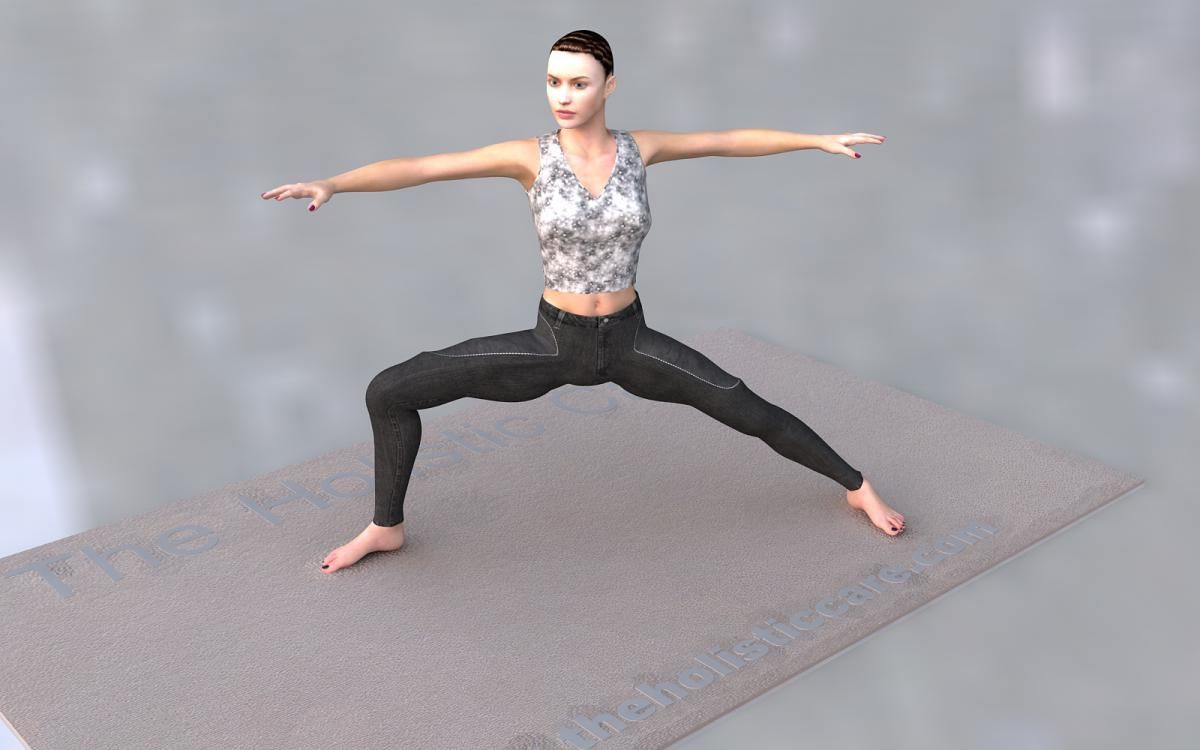
The posture places the body in a wide stance with the front knee bent and the arms reaching across the horizon. This shape trains the legs, hips, shoulders, and attention at the same time.
Step by Step Practice
Set the Feet and Legs
Stand with the feet wide apart. Turn the right foot out to face the short edge of the mat. Turn the left foot slightly inward. Bend the right knee until it stacks above the right ankle. Keep the left leg straight and active, pressing through the outer edge of the back foot.
Align the Torso and Arms
Lift the torso upright rather than leaning over the front thigh. Extend both arms at shoulder height, palms facing down. Broaden across the collarbones and keep the shoulders relaxed. Turn the head to look over the front middle finger.
Breathe in the Shape
Stay for five to eight breaths. Let the legs work without hardening the face or jaw. The front thigh may burn, but the breath should remain even. To release, straighten the front leg and turn the feet forward before changing sides.
Common Alignment Mistakes
The most common mistake is allowing the front knee to collapse inward. Keep the knee tracking in the same direction as the second and third toes. Another common pattern is leaning the torso forward. Lift through both sides of the waist and keep the pelvis centered.
Avoid locking the back knee. The leg should be straight and strong, but not jammed. Spread weight through both feet so the pose feels grounded rather than forced into the front leg only.
Benefits of Warrior II
Warrior II strengthens the quadriceps, hamstrings, glutes, ankles, and core. It opens the inner thighs and hips while training postural endurance. Because the gaze stays steady over the front hand, it also supports concentration and mental resilience.
The pose is especially useful for people who spend long hours sitting. It wakes up the legs, opens the hips, and restores a sense of rooted strength.
Modifications and Safety
If the front thigh tires quickly, shorten the stance or bend the knee less deeply. If the shoulders ache, place the hands on the hips for part of the hold. Students with knee concerns should prioritize tracking and comfort over depth.
Warrior II should feel strong, not sharp. If there is pain in the knee, hip, or ankle, come out and reset the stance.
Featured Programme
I AM: The Heart of Being
Nondual mindfulness for ages 13 to 18, integrating body awareness, attention, and inner steadiness.
Explore the CourseWritten by
Editorial Team

