✦ The Yoga of Awareness

Kundalini Yoga

The most comprehensive and direct system in the yogic tradition — working simultaneously with body, breath, sound, chakras, and the subtle energy of consciousness itself.

Kundalini Yoga is one of the most powerful and comprehensive systems of self-development in the entire yogic tradition. Where Hatha Yoga focuses primarily on the physical body, Kundalini Yoga works directly with prana — the life force — and with the subtle energy system that classical yoga texts describe as running through and around the physical body.

The word kundalini comes from the Sanskrit kundala, meaning “coiled.” It refers to the dormant spiritual energy said to lie coiled at the base of the spine, which, when awakened through sustained practice, rises through the central channel (sushumna nadi) and activates each of the seven chakras in turn, culminating in states of expanded awareness and, in the classical model, liberation (moksha).

The primary classical sources for Kundalini Yoga are the Hatha Yoga Pradipika (15th century CE), the Sat-Cakra-Nirupana (16th century CE — the most detailed classical description of the chakra system), and the Gheranda Samhita (17th century CE).

At The Holistic Care, we approach Kundalini Yoga from a nondual perspective rooted in Advaita Vedanta — understanding awakening not as a goal to be achieved through effort, but as the direct recognition of what is already and always present: the pure, luminous awareness that is your very nature. Kundalini practices are tools for removing the layers of conditioning that obscure this recognition.

✦ The Source Texts

Classical Foundations of Kundalini Yoga

Kundalini Yoga is not a modern invention. Its practices are described in detail in classical Indian texts spanning five centuries.

Hatha Yoga Pradipika (15th century CE)

The foundational text of Hatha Yoga, describing asanas, pranayama, mudras, bandhas, and the awakening of kundalini through physical and energetic purification.

Sat-Cakra-Nirupana (16th century CE)

The most detailed classical description of the chakra system — seven energy centres, their petals, seed mantras, presiding deities, and the pathway of kundalini through each.

Gheranda Samhita (17th century CE)

A classical Hatha Yoga text describing the seven-fold path of yoga including shatkarmas (purification practices), asanas, mudras, pratyahara, pranayama, dhyana, and samadhi.

Shiva Samhita

A comprehensive tantric text covering the subtle body, nadis, prana, and the systematic practices for awakening kundalini, including detailed descriptions of the five prana vayus.

✦ The Practice

What Kundalini Yoga Practice Includes

🔥

Kriyas

Precisely sequenced sets of postures, breathwork, and movement designed to produce specific energetic effects on the nervous system, chakras, and subtle body.

🌬️

Pranayama

Advanced breathing techniques — puraka (inhalation), kumbhaka (retention), rechaka (exhalation) — that directly influence the flow of prana through the nadis and awaken subtle energy.

🕉️

Mantra

Sacred sound vibration used to elevate consciousness, focus the mind, and attune to deeper frequencies. Chanting activates Vishuddha (throat chakra) and directly affects the nervous system.

🧘

Meditation

Deep inner practices that take the practitioner to the source of awareness — the still, luminous Self. From dharana (concentration) to dhyana (meditation) to samadhi (absorption).

Chakra Work

Practices that clear and activate the seven energy centres along the sushumna nadi, from Muladhara (root) to Sahasrara (crown), enabling the free flow of kundalini energy.

💫

Bandhas & Mudras

Energy locks (Mula, Uddiyana, Jalandhara) and hand gestures (Ashwini, Vajroli, Shambhavi) that direct prana, seal energy in specific areas, and deepen the effects of practice.

✦ The Energy System

The Subtle Body: Nadis, Chakras and Prana

Kundalini Yoga is built on a detailed map of the subtle body — the energetic dimension of the human being that classical yoga texts describe as interpenetrating the physical body. There are said to be 72,000 nadis (energy channels) in the subtle body. The three most important are:

  • Sushumna nadi — the central channel, running along the spine from Muladhara (base) to Sahasrara (crown). This is the channel through which kundalini rises.
  • Ida nadi — the left channel, associated with the moon, the feminine principle, and the left nostril. It carries cooling, introspective energy.
  • Pingala nadi — the right channel, associated with the sun, the masculine principle, and the right nostril. It carries warming, active energy.

Three psychic knots — granthis — block the free passage of kundalini: the Brahma Granthi at Muladhara (attachment to physical existence), the Vishnu Granthi at Anahata (attachment to emotional experience), and the Rudra Granthi at Ajna (attachment to psychic phenomena and the intellect). Sustained practice gradually dissolves these knots.

✦ The Seven Energy Centres

The 7 Chakras

Chakras are energy centres where nadis intersect and prana concentrates. Each has associated qualities, organs, elements, and yoga practices.

1

Muladhara

Root Chakra

Location: Base of spine · Element: Earth

Safety, stability, groundedness

2

Svadhisthana

Sacral Chakra

Location: Lower abdomen · Element: Water

Creativity, pleasure, fluidity

3

Manipura

Solar Plexus

Location: Solar plexus · Element: Fire

Personal power, will, confidence

4

Anahata

Heart Chakra

Location: Centre of chest · Element: Air

Love, compassion, connection

5

Vishuddha

Throat Chakra

Location: Throat · Element: Space

Communication, expression, truth

6

Ajna

Third Eye

Location: Between eyebrows · Element: Light

Intuition, inner vision, discrimination

7

Sahasrara

Crown Chakra

Location: Crown of head · Element: Consciousness

Pure awareness, spiritual connection

See our detailed guide: The 7 Chakras and Their Yoga Poses →

The Three Bandhas

Bandhas are internal muscular locks that seal prana in specific areas of the body and redirect its movement upward through the sushumna.

Mula Bandha

Root Lock

Contraction of the perineum and pelvic floor. Prevents the downward flow of apana and directs it upward toward kundalini at Muladhara.

Uddiyana Bandha

Upward Abdominal Lock

After a full exhalation, the abdomen is drawn up and in. Directly stimulates Manipura chakra and the digestive fire. Creates a vacuum that draws prana upward.

Jalandhara Bandha

Chin Lock

The chin is drawn down to the sternum, sealing prana in the thoracic cavity and stimulating Vishuddha (throat) chakra.

The Six Shatkarmas

The shatkarmas are six purification practices described in the Hatha Yoga Pradipika as prerequisites for advanced pranayama and kundalini work.

1
Dhauti: Internal cleansing of the digestive tract
2
Basti: Yogic enema — cleansing of the large intestine
3
Neti: Nasal cleansing using a neti pot with saline water (Jala Neti) or a thread (Sutra Neti)
4
Nauli: Isolation and rotation of the rectus abdominis muscles; massages the abdominal organs and activates Manipura
5
Trataka: Steady, unblinking gazing at a fixed point (typically a candle flame); purifies the mind and activates Ajna chakra
6
Kapalabhati: Skull-shining breath — rapid, forceful exhalations that cleanse the respiratory system and activate the frontal lobes
✦ The Deeper Dimension

Kundalini Yoga and Nondual Awareness

The ultimate destination of Kundalini Yoga — the awakening of Sahasrara, the crown chakra — is described in the classical texts as the dissolution of the individual sense of self into its source: pure, undivided consciousness. This is precisely the recognition that the Advaita Vedanta tradition calls moksha or liberation.

In the nondual understanding taught by Ramana Maharshi and Nisargadatta Maharaj, this recognition is not the product of years of practice but the direct seeing of what is already the case. The practices of Kundalini Yoga — the pranayama, the kriyas, the bandhas — are purification tools. They remove the obstacles. But the awareness they reveal was never absent.

This understanding transforms the motivation for practice. Rather than practising to become something, or to reach somewhere, the practitioner begins to recognise that each practice is an opportunity to see what is already here. The purification is real. The transformation is real. But what is recognised at the end of the path is what was present before the path began.

Explore Nondual Awareness →

“The awakening of Kundalini is the awakening to one’s own infinite nature — the recognition that you are not a drop in the ocean, but the ocean itself.”

Nondual Yoga Tradition

Explore the Deeper Dimensions

Our courses integrate Kundalini teachings with mindfulness and nondual awareness for a complete path of transformation.

✦ Common Questions

Frequently Asked Questions

Direct answers to the most common questions about Kundalini Yoga, its practices, and its relationship to nondual awareness.

What is Kundalini Yoga?

Kundalini Yoga is a comprehensive system of yoga that works directly with prana (life force) and the subtle energy system — the nadis, chakras, and the dormant kundalini energy said to rest at the base of the spine. It combines asanas (postures), pranayama (breathing practices), mudras (hand gestures), bandhas (energy locks), mantra (sacred sound), and meditation. Its goal is the purification of the subtle body, the awakening of kundalini shakti, and its movement through the seven chakras toward expanded awareness and, in the classical model, liberation (moksha).

What is the difference between Kundalini Yoga and Hatha Yoga?

Hatha Yoga focuses primarily on the physical body — asanas and pranayama — as preparation for meditation. Kundalini Yoga goes further, working simultaneously with the physical body, the energy body (through kriyas, bandhas, and mudras), and the mental body (through mantra and meditation). Where Hatha Yoga prepares the system, Kundalini Yoga directly works to awaken the dormant energy and activate the chakras. Both are described in the Hatha Yoga Pradipika (15th century CE), the foundational text of classical Hatha Yoga.

What is a Kriya in Kundalini Yoga?

A Kriya is a precisely sequenced set of postures, breathwork, movement, sound, and meditation designed to produce a specific energetic or physiological effect. Unlike freestyle yoga flows, Kriyas are precise and time-tested — each element placed in a specific order to achieve a particular result, such as activating the nervous system, balancing the chakras, or building mental resilience. The word kriya means "completed action" in Sanskrit.

What are the three bandhas in Kundalini Yoga?

The three bandhas (energy locks) are: Mula Bandha (Root Lock) — contraction of the perineum and pelvic floor, preventing the downward flow of apana and directing it upward toward kundalini at Muladhara; Uddiyana Bandha (Upward Abdominal Lock) — drawing the abdomen up and in after a full exhalation, directly stimulating Manipura chakra; and Jalandhara Bandha (Chin Lock) — drawing the chin to the sternum, sealing prana in the thoracic cavity and stimulating Vishuddha (throat) chakra. Together they form Maha Bandha (the Great Lock).

What are the seven chakras?

The seven main chakras run along the sushumna nadi (central channel) from the base of the spine to the crown of the head: 1. Muladhara (Root) — safety, stability; 2. Svadhisthana (Sacral) — creativity, pleasure; 3. Manipura (Solar Plexus) — personal power, will; 4. Anahata (Heart) — love, compassion; 5. Vishuddha (Throat) — communication, expression; 6. Ajna (Third Eye) — intuition, inner vision; 7. Sahasrara (Crown) — pure consciousness, spiritual connection.

What are the six shatkarmas?

The shatkarmas are six purification practices described in the Hatha Yoga Pradipika as prerequisites for advanced pranayama and kundalini work: Dhauti (digestive cleansing), Basti (yogic enema), Neti (nasal cleansing using a neti pot with saline water), Nauli (isolation and rotation of the rectus abdominis muscles), Trataka (steady unblinking gazing at a fixed point — typically a candle flame), and Kapalabhati (skull-shining breath — rapid, forceful exhalations that purify the respiratory system).

What is Kundalini awakening?

Kundalini awakening refers to the experience of the dormant energy at the base of the spine becoming activated and beginning to move upward through the chakra system. Symptoms can include: heat or electricity along the spine, involuntary movements (kriyas), visions of light, spontaneous emotional releases, heightened sensory sensitivity, and states of expanded awareness. In the classical model, full awakening — kundalini reaching Sahasrara — is synonymous with liberation (moksha). The traditional emphasis is consistent: kundalini work should be undertaken with a qualified teacher.

How does Kundalini Yoga relate to nondual awareness?

At The Holistic Care, we approach Kundalini Yoga from a nondual perspective rooted in Advaita Vedanta. Rather than treating awakening as a goal to be achieved through effort, we understand it as the direct recognition of what is already and always present: the pure, luminous awareness that is your fundamental nature. Kundalini practices are tools for removing the layers of conditioning that obscure this recognition — not techniques for creating something new.

What is the sushumna nadi?

The sushumna nadi is the central energy channel of the subtle body, running along the spine from Muladhara (base) to Sahasrara (crown). It is flanked by the ida nadi (left channel, lunar, feminine, associated with the left nostril) and the pingala nadi (right channel, solar, masculine, associated with the right nostril). Kundalini awakening occurs when the dormant energy at the base of the spine enters the sushumna and rises through each chakra in turn. Pranayama, particularly Nadi Shodhana (alternate nostril breathing), purifies and balances the ida and pingala, preparing the sushumna for this passage.

How often should I practise Kundalini Yoga?

Traditional teachings recommend daily practice, ideally in the early morning (the Amrit Vela, or ambrosial hours). Even 20–30 minutes a day is sufficient to produce noticeable changes in energy, emotional regulation, and clarity. Consistency matters far more than duration — a short daily practice outperforms a long occasional one. For beginners, starting with simple pranayama (Nadi Shodhana) and a gentle asana practice, combined with basic bandha awareness, provides a safe and effective foundation.
✦ From the Journal

Kundalini Writings

Kundalini Awakening: Understanding the Signs, Process and IntegrationKundalini Yoga

Kundalini Awakening: Understanding the Signs, Process and Integration

A grounded guide to Kundalini awakening — what it is, the recognised signs and symptoms, the role of practice in safe awakening, and how to integrate the experience.

The Holistic Care
13 Mar 202612 min read
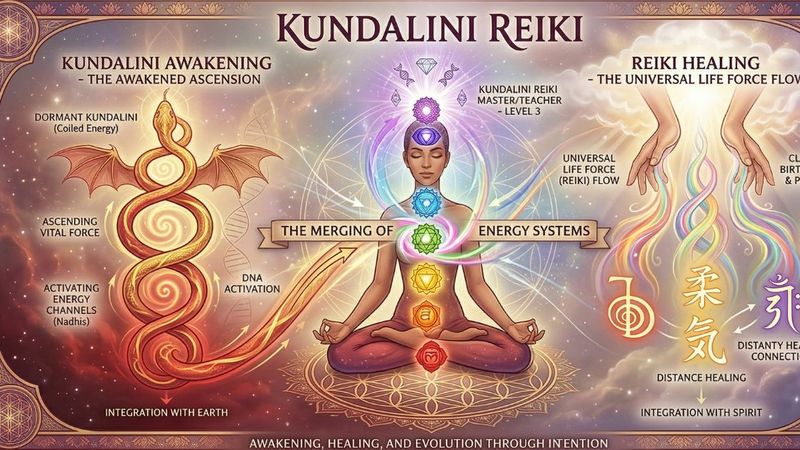
Kundalini Reiki: Diamond Crystalline DNA, Birth Trauma, Location & Past Life HealingKundalini Yoga

Kundalini Reiki: Diamond Crystalline DNA, Birth Trauma, Location & Past Life Healing

A comprehensive guide to Kundalini Reiki's most powerful advanced modalities — Diamond Crystalline DNA healing, Birth Trauma clearing, Location and Situation Reiki, and Past Life healing.

Editorial Team
11 Nov 20253 min read
Prayer to Mother KundaliniKundalini Yoga

Prayer to Mother Kundalini

Explore the devotional dimension of Kundalini practice — prayer as a sophisticated technology of consciousness transformation. Includes classical prayers, mantras (OM Namah Shivaya, Durga mantra), and the neuroscience of heartfelt devotion.

Editorial Team
24 Oct 202512 min read
Spiritual DiaryKundalini Yoga

Spiritual Diary

Discover why Swami Sivananda described the spiritual diary as an essential Kundalini sadhana tool. Learn the classical format, modern adaptations, and how consistent self-observation accelerates transformation on the yogic path.

Editorial Team
12 Oct 20259 min read
Pranayama for awakening kundalini quicklyKundalini Yoga

Pranayama for awakening kundalini quickly

Discover the specific pranayama techniques — Bhastrika with Kumbhaka, Shakti Chalana, Agni Prana, and Sushumna breathing — that the Kundalini tradition describes as most effective for rapid awakening. Includes prerequisites, daily practice sequence, and integration guidance.

Editorial Team
4 Oct 202513 min read
Great YogisKundalini Yoga

Great Yogis

Explore the lives of Kundalini Yoga's great masters — Sivananda, Yogananda, Ramana Maharshi, Milarepa, Ramakrishna, and Anandamayi Ma. Discover what their extraordinary lives reveal about the path's genuine potential and how to apply their teachings today.

Editorial Team
28 Sept 202510 min read