
Naukasana (Supine Boat Pose) is a classical core-strengthening posture that ignites the Solar Plexus Chakra, builds abdominal strength, and stimulates the digestive fire.
Quick Answer: Supine Naukasana, or Boat Pose from lying down, is a core strengthening yoga posture where the head, shoulders, arms, and legs lift from the floor like the shape of a boat. It tones the abdomen, hip flexors, and thighs, improves digestive fire, and trains breath control when practiced without strain.
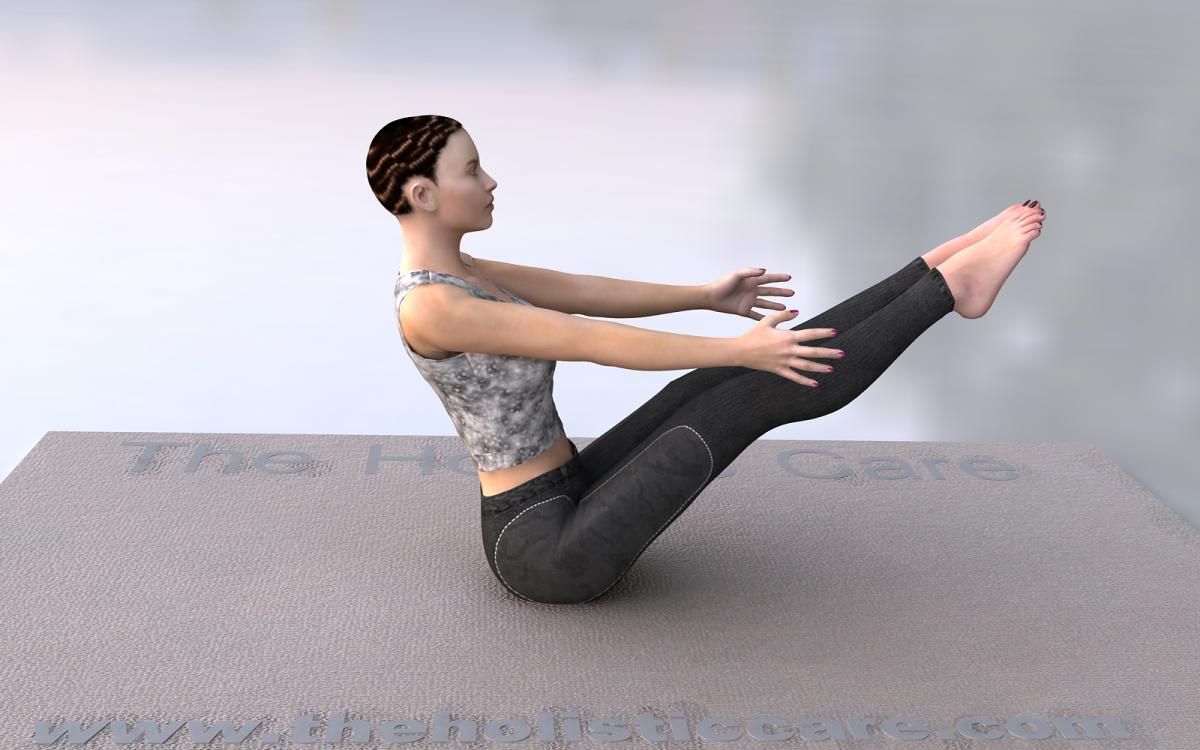
What Is Supine Naukasana
Naukasana means Boat Pose. In the supine version, the practitioner lies on the back and lifts the upper body and legs at the same time. The shape is simple, but the work is intense because the abdominal muscles must stabilize the spine against gravity.
This version differs from the seated Boat Pose often called Paripurna Navasana. Supine Naukasana begins from the floor, uses a lower angle, and asks the front body to work with precision.
Step by Step Practice
Set the Foundation
Lie on your back with the legs together and arms beside the body. Lengthen the back of the neck. Draw the lower belly gently toward the spine without flattening the breath. Keep the lower back comfortable, not aggressively pressed down.
Lift Into the Pose
On an inhale, prepare. On an exhale, lift the head, shoulders, arms, and legs from the floor. Reach the fingers toward the toes. Keep the legs active and the inner thighs together. The gaze can rest at the toes or slightly beyond them.
Stay With Breath
Hold for three to five breaths at first. Avoid holding the breath or gripping the jaw. Lower down slowly with control. Rest completely before repeating. Quality matters more than duration.
Benefits of Naukasana
Supine Naukasana strengthens the rectus abdominis, transverse abdominis, hip flexors, thighs, and spinal stabilizers. It can support posture by teaching the core to engage without collapsing the chest. Traditional yoga also values the pose for stimulating digestion and building vitality.
Mentally, the posture develops perseverance. It is easy to overwork or rush. The real practice is to remain clear, steady, and relaxed enough to breathe while the body works.
Common Mistakes
The most common mistake is lifting too high with momentum. This can strain the neck or hip flexors. Lift slowly and keep the lower ribs drawing inward. Another mistake is holding the breath. If breath becomes harsh, lower the legs or come down.
Do not force the lower back into pain. If the back arches sharply, bend the knees or keep the feet closer to the floor.
Modifications and Contraindications
Beginners can lift one leg at a time, keep the knees bent, or place the hands behind the thighs for support. Avoid the full pose during pregnancy, after recent abdominal surgery, with hernia, acute back pain, or uncontrolled blood pressure unless guided by a qualified teacher.
Finish with a neutral rest, such as knees bent and feet on the floor, then Savasana. The body should feel awake, not depleted.
Featured Programme
I AM: The Heart of Being
Mindfulness and self awareness training for teens through body, breath, and attention.
Explore the CourseWritten by
Editorial Team

