
Pavanamuktasana (Wind-Releasing Pose) gently relieves digestive discomfort, releases the lower back, massages the abdominal organs, and activates the Sacral Chakra.
Pavanamuktasana: The Wind-Releasing Pose
Pavanamuktasana translates from Sanskrit as the pose that releases wind or air. Pavana means wind, mukta means released, and asana means posture. The name is a direct description of its primary function: the compression of the abdomen created by drawing the knees toward the chest stimulates the large intestine, encourages peristalsis, and helps move trapped gas through the digestive tract.
It is one of the gentlest poses in the yoga canon, yet its effects on digestion and lower back comfort are notable enough that it appears in virtually every beginner sequence. Practised first thing in the morning before rising, it can set the tone for comfortable digestion throughout the day.
Related Yoga and Wellness Practices
Step-by-Step: Single and Double Knee Variations
Single Knee Variation: Eka Pada Pavanamuktasana
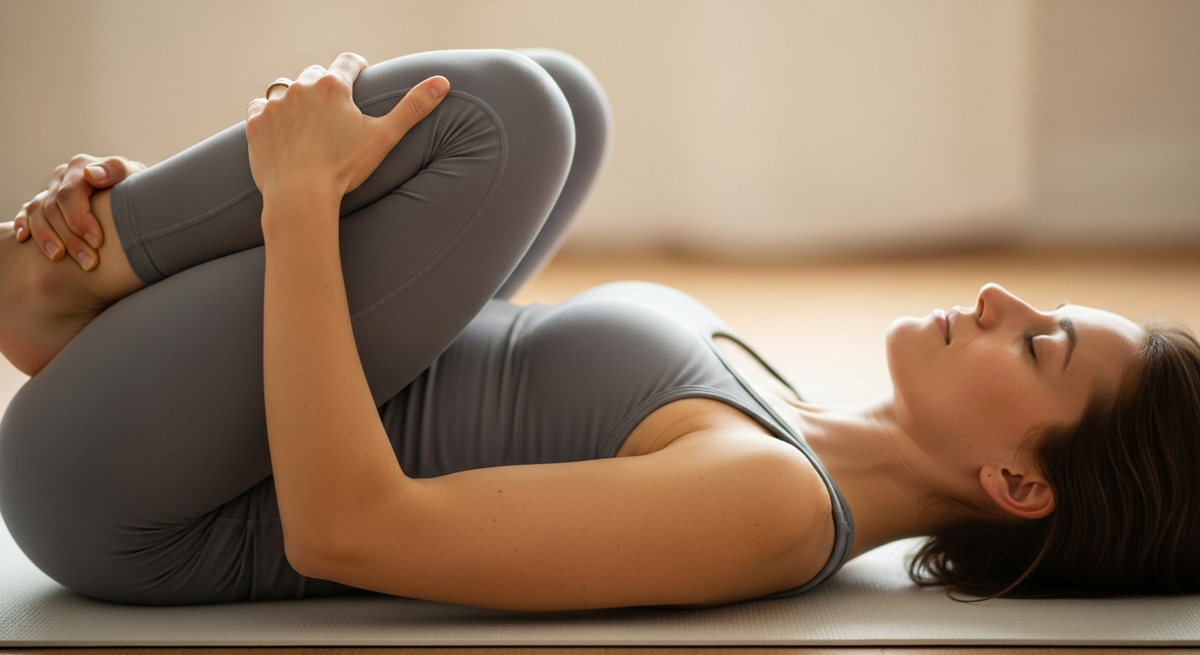
Lie on your back with legs extended. On an exhale, draw the right knee toward the chest and interlace the fingers just below the kneecap. Keep the left leg relaxed on the floor with the left foot gently flexed. Gently hug the right knee closer on each exhale, feeling the compression in the right side of the abdomen. Hold for five to eight slow breaths. On an inhale, release the knee and lower the leg. Pause, then repeat on the left side. The single-leg variation is especially useful for isolating the descending colon on the left and the ascending colon on the right.
Double Knee Variation: Dwi Pada Pavanamuktasana
Draw both knees toward the chest simultaneously and wrap both arms around the shins. Rock gently from side to side if that feels comfortable, massaging the lumbar spine against the floor. For a fuller compression, you can lift the head and bring the forehead toward the knees, though this is optional and should be skipped if there is any neck tension. Hold for five to ten breaths.
Benefits: Digestion, Bloating and the Abdominal Organs
Digestive Stimulation: Pressure and Release
The mechanical pressure placed on the abdomen in Pavanamuktasana directly stimulates the digestive organs. The colon, in particular, responds to external pressure by increasing its muscular activity. This is the same principle behind abdominal massage, and it explains why the pose is commonly recommended for constipation, bloating and general sluggishness in the gut.
The alternating single-leg version works each side of the colon in sequence, following the natural direction of digestion from right (ascending) to left (descending). When practised in this order, it can be particularly effective.
Lower Back: Decompression and Relief
Beyond its digestive benefits, Pavanamuktasana gently stretches the lower back muscles and the sacroiliac joints. The flexion of the hip while the spine is supported by the floor creates a light traction effect in the lumbar region that many people find immediately relieving after sleep or extended sitting.
Featured Programme
I Am: The Heart of Being
A nondual mindfulness course for ages 13 to 18, blending body awareness, breath and inner inquiry.
Explore the CoursePavanamuktasana in Morning Sequences
The pose is particularly valuable as part of a morning practice before getting out of bed. The digestive system is most receptive to gentle stimulation after the overnight fast, and a few minutes of wind-releasing work can start the natural digestive rhythm before the first meal. A simple morning sequence might include: single right knee, single left knee, double knee with rocking, followed by a supine spinal twist on each side.
In Sivananda and Satyananda yoga traditions, Pavanamuktasana appears near the beginning of the asana sequence, precisely because of its preparatory and cleansing effect on the abdominal region. It warms the lower back and loosens the hip flexors before more demanding postures.
Teaching Pavanamuktasana to Children and Seniors
The pose requires no props and can be practised on any firm, flat surface. For children, the double-knee version with rocking is often introduced as a playful rolling exercise rather than a formal yoga pose. The rocking movement stimulates the spine and delights younger practitioners who naturally enjoy the rolling sensation.
For seniors or anyone with hip or knee replacements, the range of hip flexion should stay within a comfortable, pain-free range. The knee need not come all the way to the chest for the digestive benefit to be present. Placing a folded blanket under the head can help if neck tension makes the supine position uncomfortable.
The pose is contraindicated during pregnancy and after abdominal surgery. For everyone else, it is one of the most universally accessible postures in the yoga repertoire, low in risk and reliable in its benefits.
Written by
Editorial Team

