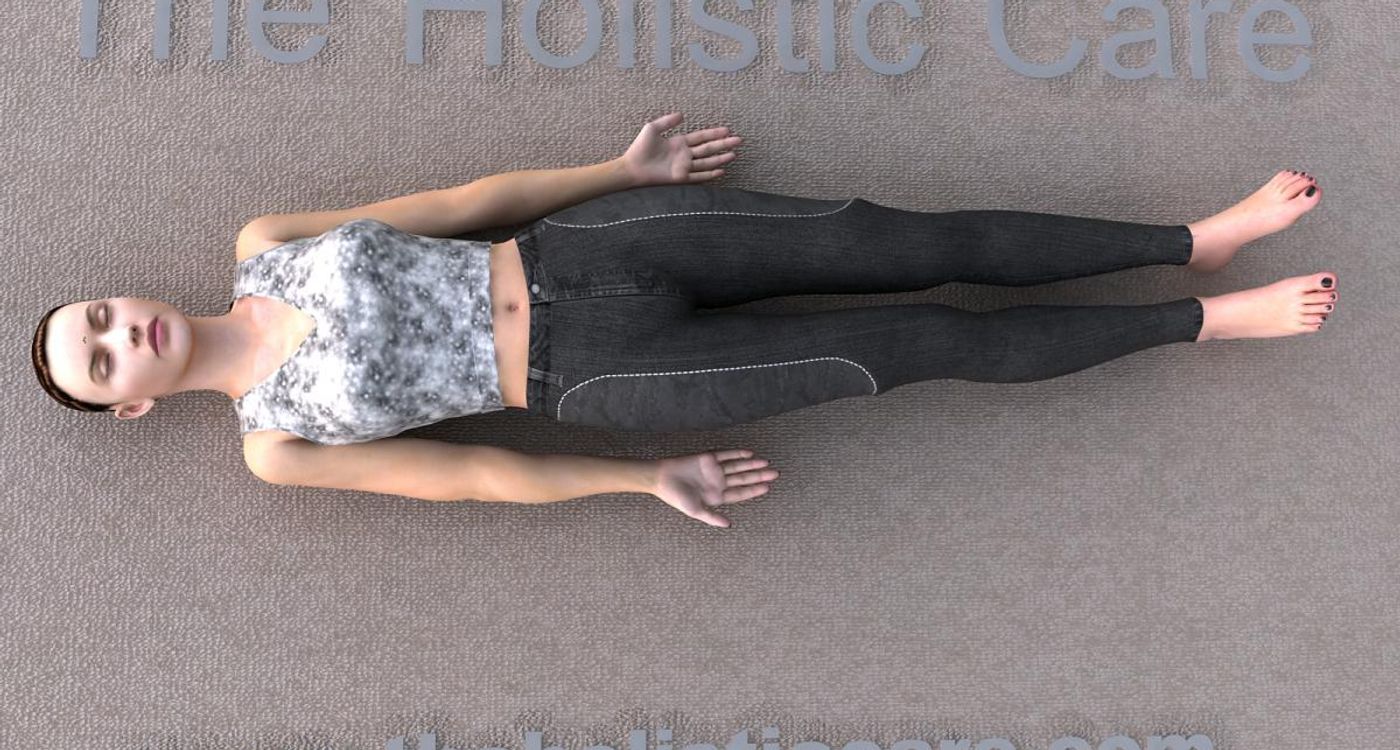
Savasana (Corpse Pose) is the most important posture in yoga — a complete surrender into stillness that allows profound rest, integration, and activation of the Sahasrara Crown Chakra.
Of all the hundreds of yoga postures, the one most practitioners rush, skip or dismiss is also the one that teachers and classical texts consider the most important. Savasana, Corpse Pose, requires you to lie completely still on your back and do absolutely nothing. It sounds like a rest. In reality it is a profound and demanding practice, and understanding why changes everything about how you approach it.
Why Savasana Is Considered the Most Important Pose
The classical Sanskrit texts are unambiguous on this point. The Hatha Yoga Pradipika (15th century) states: "Savasana removes fatigue and brings calmness of mind." The Gheranda Samhita describes it as the pose that conquers death, symbolically referring to the ego's constant movement and grasping. More recent teachers have been equally direct: B.K.S. Iyengar called it "the most difficult of all asanas," and Pattabhi Jois reportedly said that practitioners who leave Savasana early are "wasting the entire practice."
These are not hyperbole. The physical practice of yoga, the asanas, pranayama and movement, creates a set of physiological and energetic changes in the body-mind system. Savasana is the integration period: the time when those changes consolidate, when the nervous system shifts from sympathetic (active) to parasympathetic (rest and digest) dominance, and when the body has the internal conditions required to reorganise at a deeper level. Leaving early is the equivalent of removing bread from the oven before it has finished baking.
The Neuroscience of Savasana
What Happens in the Nervous System During Savasana
Parasympathetic Activation
Heart rate slows, blood pressure drops, digestion activates — the body shifts into repair and recovery mode
Brainwave Shift
EEG studies show a shift from beta (active thinking) to alpha and theta waves — associated with deep relaxation and creative integration
Cortisol Reduction
Even 10 minutes of Savasana produces measurable reductions in salivary cortisol — comparable to a 20-minute sleep
Memory Consolidation
The motor learning from the asana practice is consolidated during Savasana — neural pathways for new movement patterns are reinforced during rest
Research from the Cleveland Clinic found that even brief periods of intentional stillness activate the default mode network (DMN), the brain's internal processing network associated with self-reflection, creativity and emotional integration. This is part of why practitioners often report insights, realisations or significant emotional shifts during or immediately after Savasana. The brain is not idle; it is doing important internal work.
How to Practise Savasana Correctly
Physical Setup: Alignment Matters
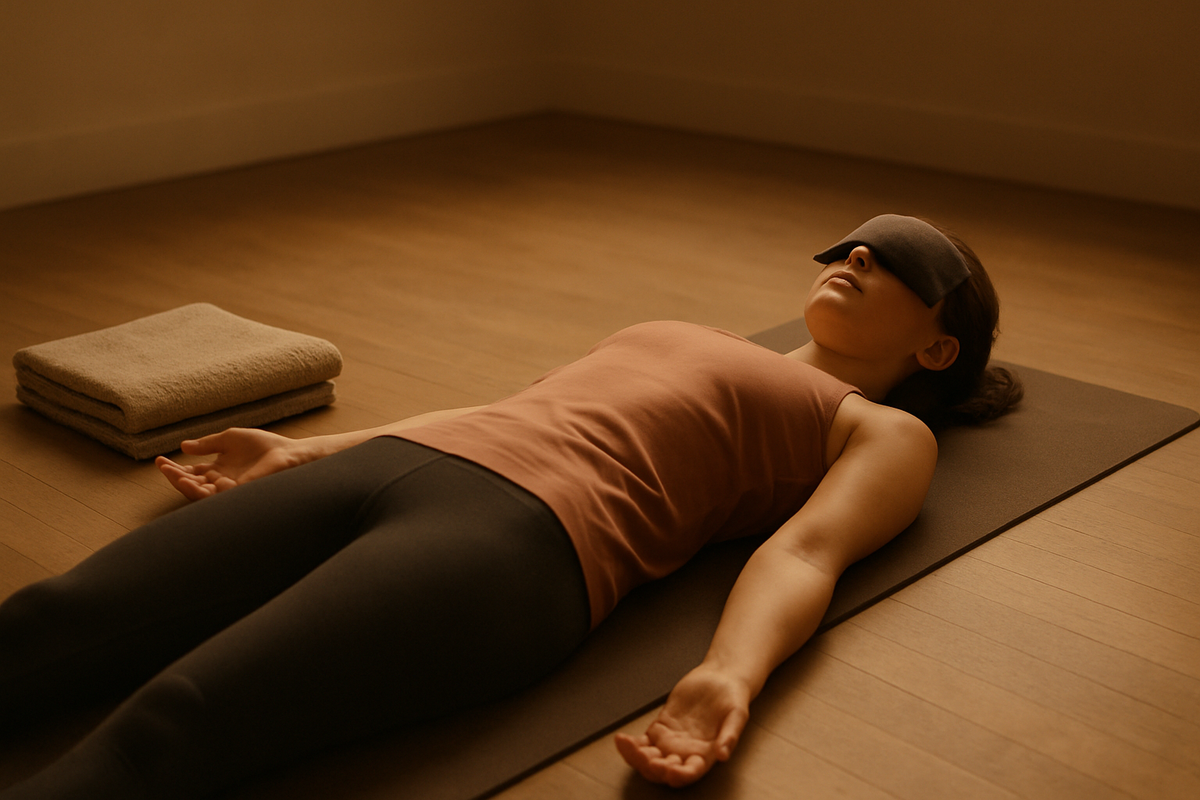
Savasana is not simply lying on the floor. Thoughtful alignment creates the conditions for maximum relaxation. Lie on your back with the feet approximately mat-width apart, allowing the feet to fall naturally outward. The arms rest alongside the body with a small gap between the upper arm and the ribcage, just enough that the armpits are not compressed. Turn the palms to face the ceiling (supination), which naturally opens the chest and draws the shoulder blades apart. The chin is level, neither jutting upward nor tucked downward. Close the eyes gently.
If the lower back is uncomfortable, place a folded blanket or bolster beneath the knees to reduce the lumbar curve. If the neck feels strained, use a thin folded blanket beneath the head. Cold is the most common reason practitioners cannot relax, so always have a blanket available. Cover the eyes with an eye pillow to reduce light stimulation and enhance inward withdrawal.
Duration: How Long Is Enough?
The general guideline is that Savasana should last approximately one minute for every five minutes of asana practice. After a 60-minute class, this means 12 minutes. After a 90-minute class, 15–18 minutes. In practice, most studio classes allow 5–7 minutes, which is shorter than ideal. When practising at home, resist the temptation to abbreviate. Set a gentle timer so you are not monitoring the clock.
The Mental Practice: Awake But Unmoving
The critical distinction between Savasana and sleep is consciousness. You are aiming for a state in which the body is completely still and the senses are withdrawing, while a thread of awareness remains intact. The challenge is that for most people, particularly in the Western world, the instruction to do nothing immediately triggers the planning mind, the to-do list, the mental commentary. This is not failure; it is the practice. Each time you notice the mind has wandered and gently return to the simple fact of lying here, you are strengthening the same attentional muscle that meditation trains.
Common Mistakes in Savasana
Leaving Early
The most common and costly mistake. Leaving Savasana before the nervous system has completed its parasympathetic shift, typically the first 8–10 minutes, means the integration of the practice does not occur. The cortisol released during the more vigorous parts of the practice has not fully metabolised. Set the timer and commit.
Mental Restlessness
The second most common issue is treating Savasana as thinking time: lying there but actually planning, reviewing, problem-solving. The antidote is a simple and non-aggressive attention anchor: either the breath (noticing the rising and falling of the abdomen), a body scan (moving awareness slowly through the body), or simply the sounds in the room. The moment you notice the mind has wandered, return without self-criticism.
Sleeping
Falling asleep is not the same as Savasana, though it is not always undesirable. If you are significantly sleep-deprived, the body may simply take what it needs. For those who regularly fall asleep, keeping the eyes half-open ("fish eyes"), placing a bolster under the knees, or using a guided Savasana can help maintain the thread of consciousness.
Savasana and Yoga Nidra: The Continuum of Conscious Rest
Yoga Nidra (yogic sleep) can be understood as an extended, structured Savasana with guided internal awareness. Both practices begin in the same physical position. Where standard Savasana involves passive resting with breath awareness, Yoga Nidra is a systematic journey through body scanning (nyasa), breath awareness, sensation pairs, visualisation and the borderland between waking and sleep. Research by Dr Richard Miller's iRest Institute has documented significant reductions in PTSD symptoms, anxiety, chronic pain and insomnia through regular Yoga Nidra practice.
If Savasana is a door into deep rest, Yoga Nidra is the full room beyond it. Practitioners who develop a consistent Savasana practice often find the transition to Yoga Nidra natural and richly rewarding.
Featured Programme
Yoga Nidra MP3 Guided Practice
Savasana taken to its deepest expression: a full guided Yoga Nidra practice for profound rest and restoration.
Begin TonightFrequently Asked Questions
Why do I cry in Savasana?
Emotional release during Savasana is common and has a clear physiological explanation. The vigorous movement of yoga practice, combined with breath work, often loosens emotional material that has been stored in the body as muscular tension. When the body finally enters stillness, this material surfaces. Crying, sighing, a sudden wave of grief or joy are all healthy signs of release. There is no need to analyse or resist; the practice is simply allowing what has been held to move through. This is one of yoga's most valuable and underappreciated therapeutic functions.
Can I do Savasana if I'm pregnant?
In the second and third trimesters, lying flat on the back for extended periods is generally not recommended, as the weight of the uterus can compress the vena cava, the major vein returning blood to the heart, reducing circulation. Pregnant practitioners should use a left side-lying position with a bolster between the knees, which provides similar deep rest without the circulatory risk. Always follow guidance from your midwife or obstetrician.
How does Savasana differ from meditation?
In Savasana, the body is horizontal and the primary instruction is to be still. There is less directive focus than in most seated meditation practices. In seated meditation, you are typically maintaining an upright posture and actively working with the attention. Savasana involves a more receptive, surrendered quality. Both are valuable and complementary: many teachers recommend using Savasana to settle the nervous system before transitioning to seated meditation practice, rather than treating them as alternatives.
Written by
Editorial Team