
Dive into Ushtrasana — Camel Pose. Open your heart, stretch your entire front body, and cultivate courage and compassion with this powerful kneeling backbend.
Quick Answer: Ushtrasana, or Camel Pose, is a kneeling backbend that opens the chest, front hips, abdomen, and throat while strengthening the back body. The safest practice lifts the sternum first, keeps the pelvis supported over the knees, and avoids collapsing into the lower back or neck. It builds courage, breath capacity, and postural openness.
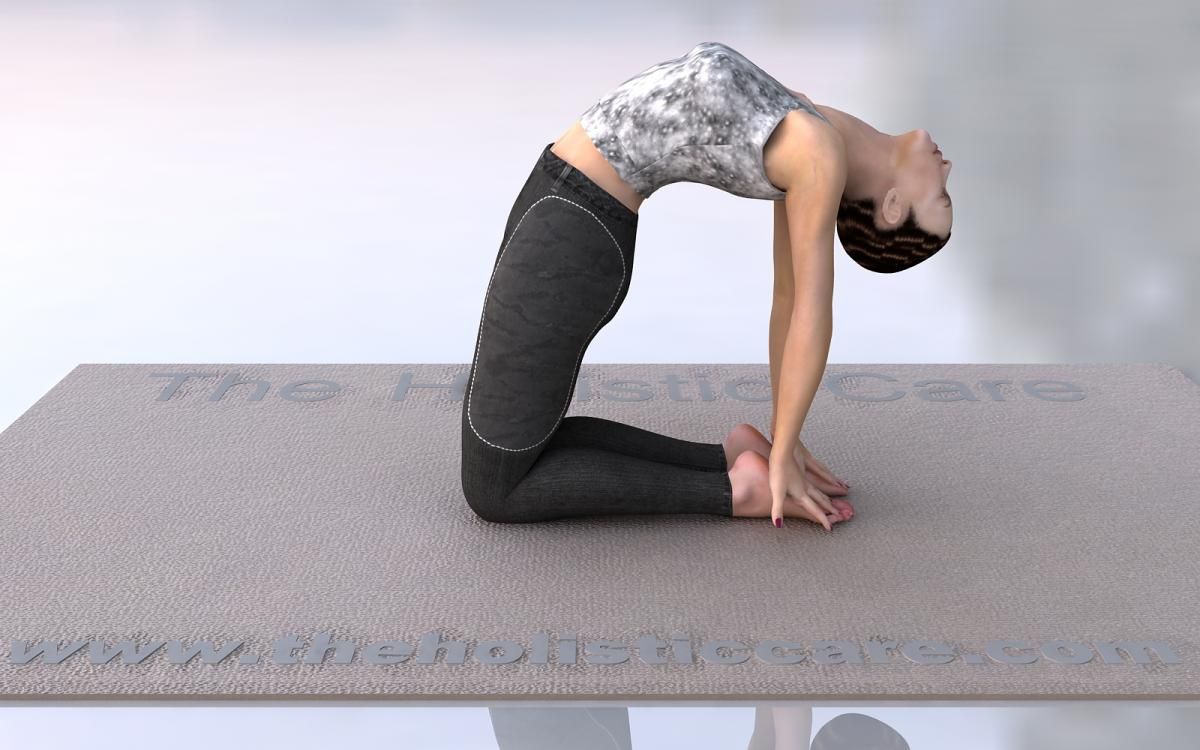
What Is Ushtrasana
Ushtrasana is a kneeling backbend named after the camel. In its full form, the hands hold the heels while the chest lifts toward the sky. The pose can feel expansive and energizing, but it must be approached with patience.
The aim is not to drop backward as far as possible. The aim is to create even length through the spine while opening the chest and front hips. When the lower back carries all the movement, the pose becomes compressed. When the whole front body opens, it becomes spacious.
Step by Step Practice
Prepare the Base
Kneel with the knees hip width apart. Press the tops of the feet into the floor, or tuck the toes if reaching the heels is difficult. Place the hands on the back of the pelvis with fingers pointing down. Draw the elbows toward each other to broaden the chest.
Lift Before You Bend
Inhale and lift the sternum. Lengthen the tailbone down without gripping the buttocks. Begin to arch the upper back while keeping the thighs vertical. If comfortable, reach one hand at a time toward the heels. Keep lifting the chest as you settle into the pose.
Breath and Exit
Stay for three to six slow breaths. To come out, bring the hands back to the pelvis, press the thighs down, and lead with the chest as you rise. Rest in Vajrasana or Child Pose afterward.
Benefits of Camel Pose
Ushtrasana stretches the chest, abdomen, hip flexors, quadriceps, throat, and shoulders. It strengthens the spinal extensors and can help counter rounded posture from desk work. The pose also encourages fuller breathing by opening the ribs and front lungs.
Emotionally, many students experience backbends as vulnerable. Practicing with steadiness can support confidence and a more open relationship to sensation.
Common Mistakes
Avoid pushing the hips behind the knees. Keep the thighs moving forward and the pelvis supported. Avoid throwing the head back without neck support. The head can stay neutral or only release if the throat remains spacious.
Do not squeeze the buttocks aggressively. Gentle tone is useful, but hard gripping can jam the lower back. Think of length first and depth second.
Modifications and Safety
Keep hands on the pelvis for a mild version. Use blocks beside the ankles if the heels are far away. Tuck the toes to raise the heels. Students with neck injury, acute lower back pain, migraine, dizziness, or uncontrolled blood pressure should practice a gentler supported version or avoid the pose.
Warm up with gentle backbends, shoulder opening, and hip flexor stretches before attempting the full posture.
Featured Programme
The I AM Programme
A guided adult programme for presence, embodied awareness, and self inquiry.
Explore the ProgrammeWritten by
Editorial Team

