
Discover Uttanasana — the standing forward fold that stretches the hamstrings, calms the mind, and refreshes the brain with a gentle inversion. Perfect for all levels.
Uttanasana: What the Standing Forward Bend Is
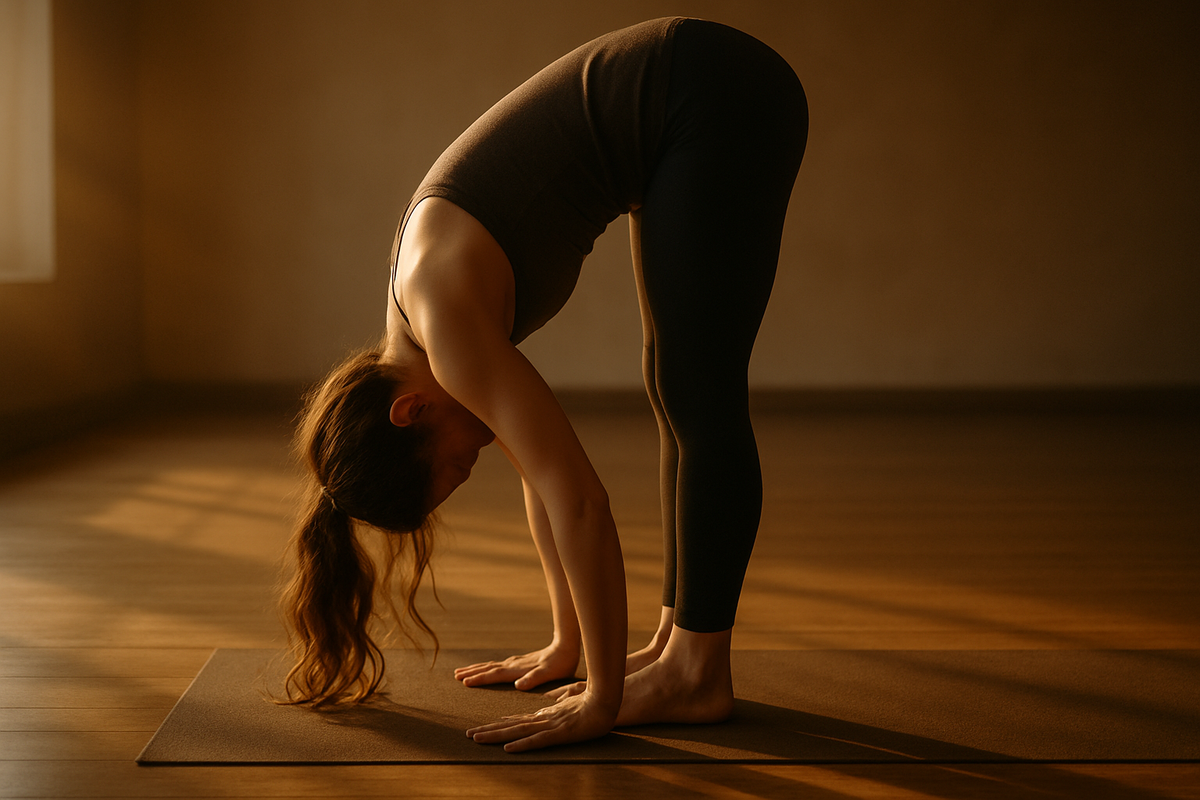
The name uttanasana comes from the Sanskrit ut, meaning intense, and tan, meaning to stretch or extend, combined with asana. It is often translated as Intense Stretch Pose, though most practitioners know it simply as Standing Forward Bend. In the pose, the upper body folds forward from the hip joints, and the hands or fingers reach toward or rest on the floor, on blocks, or on the shins. The head hangs heavy. The spine may lengthen freely downward.
Uttanasana appears throughout yoga practice. It is a transition pose in sun salutations, a standing pose in its own right in Hatha sequences, and a counterpose following backbends. Its effects are broad: it lengthens the entire posterior chain of the body, calms the nervous system, and creates a quality of inwardness that is noticeably different from more active standing postures.
Step-by-Step Alignment
Entry: Folding from the Hips
Stand in tadasana with the feet hip-width apart. On an exhale, hinge forward from the hip joints rather than rounding from the waist. This distinction matters. Folding from the hips maintains the length of the lumbar spine during the initial descent. As flexibility allows, the spine can then lengthen and release further. Bend the knees generously if the hamstrings are tight, particularly in the first few breaths of the fold. Pressing the fingertips or palms to the floor, or placing them on blocks at any height, gives the arms a reference point and the upper body something to release toward.
Hold: Creating Length
Once in the fold, shift weight slightly forward toward the balls of the feet. This engages the hamstrings more completely and encourages the sitting bones to reach toward the ceiling. With each inhale, create a small lengthening through the spine from tailbone to crown. With each exhale, allow the fold to deepen without force. The neck is completely free: let the head hang without holding it up or pushing it down. After several breaths, the back of the neck will release and the shoulders will drop away from the ears.
Exit: Returning Upright
To come up, bend the knees and press through the feet. Draw the low belly in and roll up slowly through the spine, vertebra by vertebra, with the head rising last. Coming up too quickly from an extended forward fold can cause a head rush. Take your time.
Physical Benefits: Hamstrings, Spine and the Nervous System
The primary physical action of uttanasana is the lengthening of the hamstrings, the group of three muscles running along the back of each thigh. In most people these muscles are chronically shortened through prolonged sitting, and the pulling sensation felt in the backs of the legs during a forward fold is a direct result of this. Held consistently over weeks and months of practice, uttanasana gradually increases hamstring length and reduces the sensation of tightness.
At the same time, the spinal column is decompressed. In an upright posture, the discs between the vertebrae bear the compressive weight of the torso above them. In a forward fold, particularly with the knees softened, much of this compression is reduced as the spine hangs. Traction develops gently through the lumbar and thoracic regions. Many practitioners with lower back tension find that a few minutes in uttanasana each day shifts the quality of sensation in this area noticeably.
The effect on the nervous system is perhaps the most immediate. Because the head drops below the heart in uttanasana, it is classified as a mild inversion. Blood flow to the brain increases slightly. More significantly, the pose activates the parasympathetic nervous system, the rest and digest branch, through a combination of the forward fold, the compression of the abdomen and the hanging of the head. The result is a calming, quieting effect that makes uttanasana valuable at the end of a practice or during a stressful day.
Modifications and the Rag Doll Variation
Using Bent Knees and Blocks
The most important modification for uttanasana is to bend the knees. This is not a compromise. It allows the lumbar spine to release fully and prevents the pelvis from posteriorly tilting in a way that strains the lower back. Practitioners with tight hamstrings who insist on straight legs often end up bending from the lumbar spine rather than the hip joints, which defeats the purpose of the pose and risks injury over time. Blocks placed at any height under the hands give the upper body a surface to release toward and allow the arms to hang without tension.
Rag Doll: The Gravity Variation
The rag doll variation begins from a wide-stance forward fold. Cross the forearms and hold each elbow with the opposite hand, then allow the upper body to swing very gently from side to side, or simply to hang completely still with all muscular effort released. The weight of the crossed arms adds gentle traction through the upper spine and neck. This variation is particularly good for releasing held tension in the shoulders and the back of the neck.
Energetic Effects and When to Avoid Uttanasana
Inward-Turning Energy
In yogic energetic anatomy, poses that fold the body forward are understood to draw awareness inward. The external world is literally turned away from, and the practitioner's attention, if cultivated, can settle into a quieter, more introspective register. This makes uttanasana particularly useful as a transition between active and still phases of a practice, or as a brief standing pause before seated meditation.
Contraindications: When to Modify or Avoid
Uttanasana should be approached with care by anyone with a herniated lumbar disc, as the forward fold increases pressure at the disc and may aggravate symptoms. Those with hamstring injuries should keep the knees well bent and avoid aggressive pulling sensations. People with high blood pressure or glaucoma should be cautious with inversive positions and consult a healthcare professional. During pregnancy, a wide-leg variation with blocks may be more comfortable as the abdomen grows. If dizziness occurs at any point, come up slowly and rest.
Featured Programme
The I AM Programme
An adult course in nondual mindfulness, yoga and self-inquiry. Ground yourself in something deeper than technique.
Explore the ProgrammeWritten by
Editorial Team

