
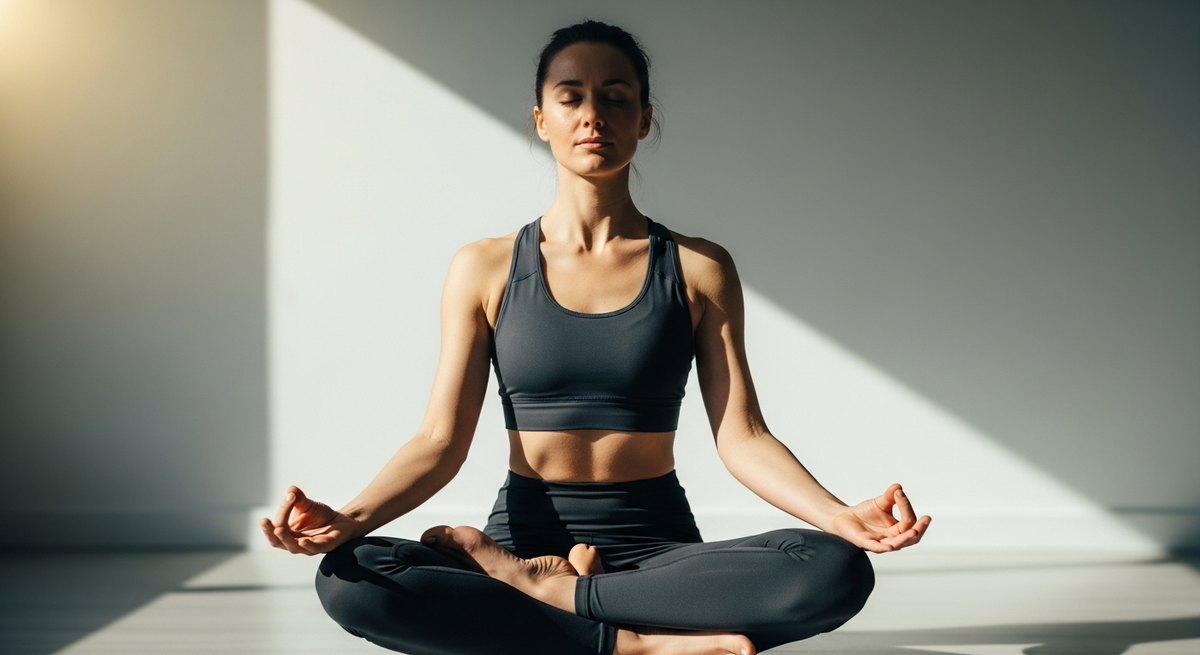
Siddhasana (Accomplished Pose) is the classical meditation seat of the adept — applying natural Mulabandha, activating the Root Chakra, and creating the perfect environment for pranayama and meditation.
Siddhasana: The Accomplished Pose for Meditation and Pranayama
Of all the sitting postures described in the classical texts of Hatha yoga, Siddhasana holds a place of particular distinction. The Hatha Yoga Pradipika states directly: "Among all asanas, only one, Siddhasana, should always be practiced. It cleanses the impurities of 72,000 nadis." The Gheranda Samhita calls it one of the best of all asanas for the practice of yoga.
The name comes from siddha, meaning "accomplished" or "adept," and asana, meaning posture. A siddha is one who has attained mastery, and the name signals that this is not merely a comfortable way to sit but a posture with specific energetic effects that support the deeper stages of yoga practice.
Siddhasana is often compared to Padmasana (lotus pose), which is more widely taught. Understanding how they differ, and why classical texts favour Siddhasana for pranayama and meditation practice specifically, helps practitioners make better decisions about which posture to cultivate.
Related Meditation and Yoga Resources
How Siddhasana Differs From Padmasana and Sukhasana
Sukhasana: Easy Pose
Sukhasana (easy pose, or simple cross-legged sitting) is the most accessible seated posture and appropriate for beginners. The ankles are crossed, the knees rest on the thighs, and the pelvis can be elevated on a folded blanket or meditation cushion to allow the spine to lengthen naturally. Sukhasana is a useful starting posture, but it does not create the specific perineal pressure that classical texts consider important in Siddhasana.
Padmasana: Lotus Pose
Padmasana is the posture most associated with meditation in popular imagery. Both feet rest on the opposite thighs, creating a stable, symmetrical base. It requires considerable hip external rotation and ankle flexibility and is not accessible to many Western practitioners without years of preparation. Classical texts do highly value Padmasana, but several specifically recommend Siddhasana for pranayama because of the pressure it creates at the perineum.
Siddhasana: The Accomplished Pose
In Siddhasana, the heel of one foot is drawn to press firmly against the perineum (the space between the genitals and anus, the location of Muladhara chakra). The other foot is placed on top, with its heel pressing against the pubic bone and, in the complete version, with the toes tucked into the fold of the opposite knee. This creates a triangular base that is both very stable and specifically positioned to exert pressure on Muladhara and Swadhisthana chakra, the two lowest energy centres in the classical system.
Step-by-Step: How to Come Into Siddhasana
Begin seated on the floor with legs extended. Bend the left knee and draw the left heel toward the perineum, so that the sole of the left foot rests against the inner right thigh. The heel should press firmly against the perineum, not merely rest near it. Now bend the right knee and place the right foot on top of the left ankle, with the right heel pressing against the pubic bone. The toes of the right foot can be tucked into the fold between the left calf and thigh.
The knees should ideally rest on or close to the floor. If they are significantly raised, place a folded blanket or firm cushion under the sitting bones. The spine should be upright without strain: natural lumbar curve present, chest open, chin slightly tucked. The hands can rest on the knees in jnana mudra (tips of index finger and thumb touching) or simply with palms down.
Alternate the leg on top in successive sessions. Classical guidance recommends sitting in Siddhasana for twelve years to fully activate its effects, which is less a literal prescription than an indication that the posture rewards sustained, long-term practice rather than occasional visits.
The Perineal Pressure: Effects on Prana
The specific mechanism by which Siddhasana is said to support pranayama and meditation practice centres on the heel pressure at the perineum. Classical yoga locates Muladhara chakra at the perineum, the base of the sushumna nadi and the seat of the dormant kundalini energy. The physical pressure of the heel at this point is understood to stimulate Muladhara and encourage the upward movement of apana vayu (the downward-moving prana associated with the lower body).
Bringing apana upward to meet prana in the region of the navel is described in several classical texts as the prerequisite for awakening the central channel (sushumna). Whether one accepts the energetic model or not, practitioners who use Siddhasana consistently report that the posture produces a distinct quality of containment and upward-moving alertness that is different from other sitting positions. The pressure at the perineum acts as a natural mula bandha (root lock), which also conserves prana and redirects it upward.
Why Classical Texts Recommend Siddhasana for Pranayama
Several classical texts make explicit recommendations about posture for pranayama. The Hatha Yoga Pradipika and the Shiva Samhita both indicate that Siddhasana is superior to other postures for this purpose. The reasoning is functional: pranayama aims to draw prana into sushumna, and the perineal pressure and energetic containment of Siddhasana create the physical conditions that support this process most directly.
Padmasana is also appropriate for pranayama, but requires the hip flexibility that many practitioners lack. Siddhasana is more accessible while still providing the specific energetic conditions that matter.
Featured Programme
The I AM Programme
A structured nondual mindfulness programme for adults, with pranayama, meditation, and deep inquiry into the nature of awareness.
Explore the ProgrammePreparing the Hips and Modifications for Less Flexible Practitioners
Hip Preparation: Opening the External Rotators
The primary limitation for most practitioners learning Siddhasana is insufficient external rotation of the hips. The preparatory practices most useful for addressing this are baddha konasana (bound angle pose, holding and gradually working toward the floor), supine pigeon (reclined figure-four), half happy baby, and gomukhasana (cow face pose) legs. Consistent daily practice of these poses over six to twelve weeks will build the hip mobility needed to sit in Siddhasana comfortably.
Modifications: Supporting the Practice
Until the hips are open enough to allow the knees to rest near the floor, sit on a firm meditation cushion or several folded blankets to elevate the pelvis above the level of the knees. This forward tilts the pelvis and allows the lumbar spine to maintain its natural curve without strain. A meditation bench (seiza bench) is not suitable for Siddhasana specifically, as it requires kneeling rather than cross-legged sitting.
If the perineal pressure of the heel feels uncomfortable initially, begin with Sukhasana or a cushioned half-Siddhasana where the lower heel rests in front of the perineum rather than pressing against it, and gradually introduce the full position as the hips and connective tissues adapt.
Siddhasana rewards patience. It is not a posture to be forced into place but one that unfolds as the body prepares for it. The classical emphasis on this posture reflects a deep understanding that the right physical container can support the stillness and internal attention that meditation and pranayama require.
Written by
Editorial Team

