
Matsyasana (Fish Pose) is a classical chest and throat opener that stimulates the thyroid, expands the lungs, and activates the Anahata Heart Chakra.
Matsyasana: The Counterpose the Shoulder Stand Needs
Matsyasana, the fish pose, is most often introduced in classical hatha yoga as the essential counterpose to sarvangasana, the shoulder stand. Where sarvangasana brings the chin deep into the chest and compresses the front of the throat, matsyasana does the opposite: it extends the neck backward, opens the throat fully, and arches the upper back in a chest-opening backbend. This complementary relationship is why traditional sequences almost always pair the two poses, one immediately following the other.
The name comes from the myth that Matsya, the fish avatar of Vishnu, used this posture to float on the primordial waters. The shape of the body in the pose, with the chest lifted and the head resting on the crown, does resemble a fish at the surface of water, arching upward toward the light. Beyond mythology, the pose has concrete and well-documented benefits for posture, respiratory function, and the endocrine system.
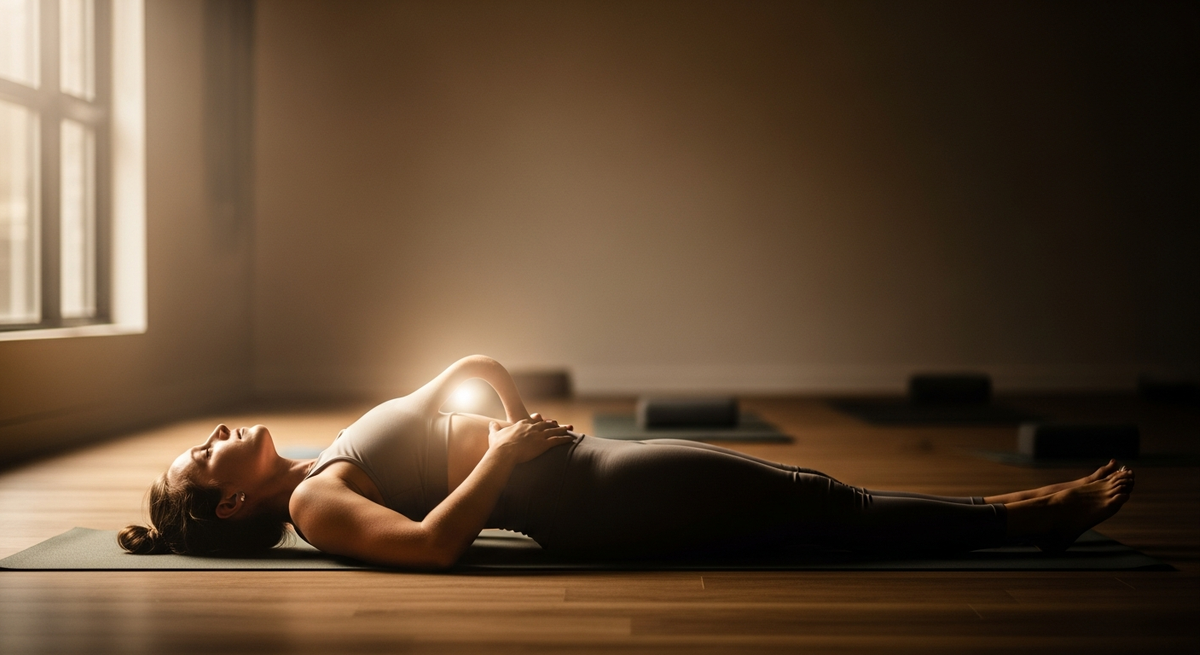
Step-by-Step: Coming Into Matsyasana
Starting Position: Legs and Hips
Lie flat on your back with the legs extended. You may keep the legs straight throughout, or bring them into padmasana (lotus) if that is available to you. Place the hands beneath the hips, palms facing down, so the forearms and elbows press into the floor alongside the torso. The hands and forearms form the lever that lifts the chest.
Lifting the Chest: The Backbend
On an inhale, press the elbows firmly into the floor and lift the chest toward the ceiling. The upper and mid back arch away from the floor. Then allow the head to tilt backward until either the crown of the head rests lightly on the mat or the head is suspended in space if the arch is shallow. The weight should rest primarily on the elbows and forearms, not on the head and neck. If there is significant neck tension or discomfort, reduce the arch and support the head with a folded blanket.
The Breath in Matsyasana
With the chest fully open and the throat exposed, breathing deepens naturally. The intercostal muscles between the ribs have space to expand laterally. Take long, full breaths in the pose, feeling the ribcage lift and expand with each inhale. This respiratory freedom is one of the immediate, palpable benefits of the posture, and it makes matsyasana particularly valuable for anyone with respiratory restrictions or habitually shallow breathing.
Benefits: Posture, Chest Opening and the Thyroid
Posture: Countering Forward Head Position
The position of the head and neck in matsyasana is the anatomical opposite of the forward head posture most people carry through their day. Modern screen use encourages the head to migrate forward of the shoulders, shortening the sub-occipital muscles and overstretching the posterior neck. Matsyasana reverses this pattern by stretching the anterior neck and upper chest, which progressively lengthens the pectoral and sternocleidomastoid muscles. Consistent practice contributes to better resting posture over time.
Respiratory Function: Opening the Upper Lungs
The arch of the thoracic spine in matsyasana opens the anterior chest and lifts the sternum, which expands the upper lobes of the lungs. Most people are chest-breathers who habitually use only the middle and lower portions of their lung capacity. Matsyasana, by creating structural space in the upper chest, encourages fuller breathing and can reduce the tightness in the intercostal muscles that often accompanies anxiety and chronic stress.
Thyroid and Parathyroid: The Endocrine Connection
Just as sarvangasana stimulates the thyroid gland through compression followed by release, matsyasana stimulates it through extension. The anterior neck stretch increases blood flow to the thyroid and parathyroid glands. This complementary action is part of why the two poses are traditionally paired: together they massage the glandular tissue from both directions, which classical yoga texts associate with metabolic balance and sustained energy.
Featured Programme
The I AM Programme
A structured adult programme combining yoga, pranayama and nondual mindfulness.
Explore the ProgrammeVariations: From Supported to Advanced
Supported Fish: Using a Bolster or Rolled Blanket
Place a bolster or thickly rolled blanket horizontally across the mat at the level of the shoulder blades. Lie back over it so the bolster supports the upper back in the arch. Allow the head to rest on the floor or on a second prop. This fully supported version is ideal for beginners, for those with neck sensitivity, or as a restorative pose held for three to five minutes with complete muscular release.
Legs in Lotus: The Classical Version
In the traditional hatha yoga version, the legs are in padmasana throughout. The lotus provides a stable base that allows a deeper arch in the upper back. The hands may hold the feet, which increases the chest opening further. This version requires full lotus flexibility and should only be attempted when that prerequisite is genuinely present.
Legs Extended: The Accessible Middle Ground
Keeping the legs straight and active while in the backbend is a strong intermediate variation. Pressing the heels firmly away from the body engages the quadriceps and gluteal muscles, which stabilises the pelvis and allows the upper back arch to deepen without compressing the lower back.
Sequencing Matsyasana After Sarvangasana
The classical sequence calls for matsyasana immediately after coming out of sarvangasana, held for approximately half the duration of the shoulder stand. If sarvangasana was held for four minutes, matsyasana should be held for roughly two minutes. This ratio ensures the complementary stretch is proportional to the preceding compression.
After matsyasana, rest in savasana for at least one minute before continuing the practice or ending the session. The combination of a sustained inversion followed by its counterpose, followed by stillness, is one of the most complete sequences in classical yoga for restoring the nervous system and leaving the practitioner feeling genuinely refreshed rather than depleted.
Written by
Editorial Team

