
Janu Sirsasana (Head-to-Knee Forward Bend) is a classical seated forward fold that stretches the hamstrings, calms the mind, and opens the hips with beautiful asymmetry.
Quick Answer: Janu Sirsasana, or Head to Knee Forward Bend, is a seated yoga pose with one leg extended and the other knee folded outward. The practitioner folds over the straight leg with a long spine. It stretches the hamstrings, back, hips, and groin, supports digestion, and encourages quiet inward attention when practiced gently.
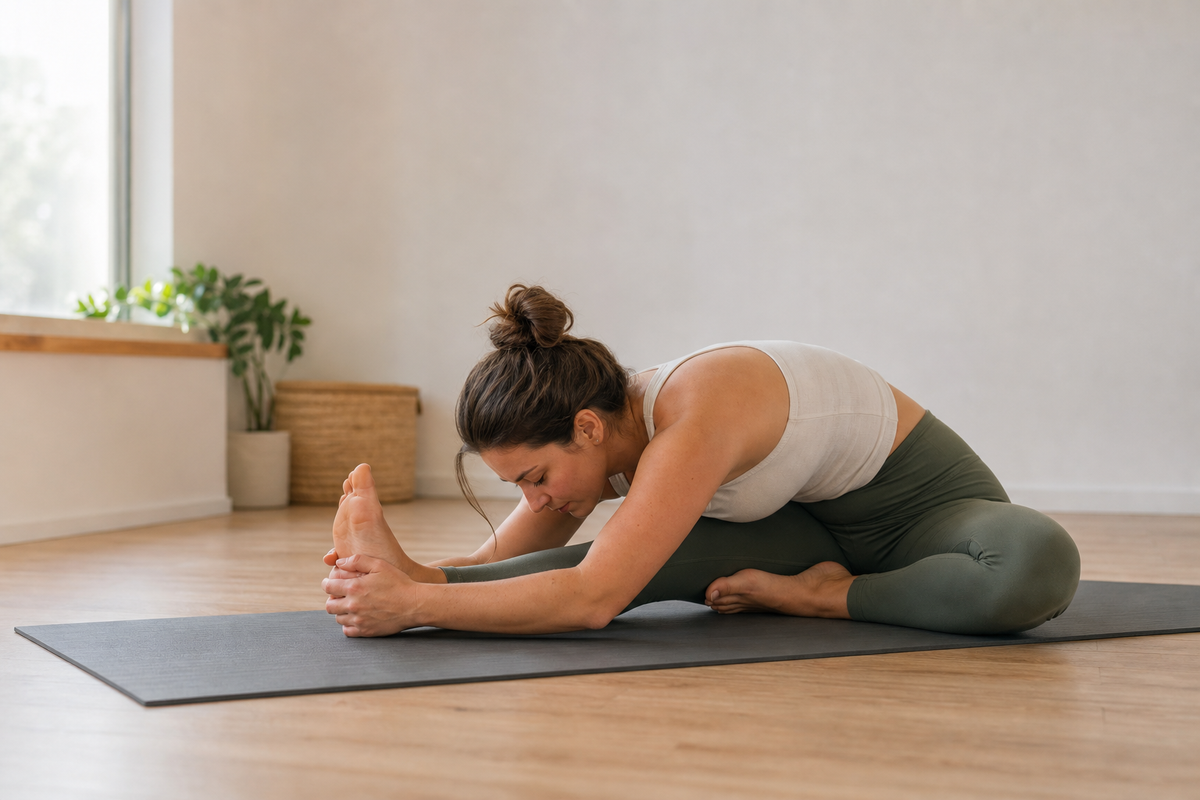
What Is Janu Sirsasana
Janu means knee and sirsa means head. The English name, Head to Knee Pose, can mislead beginners into forcing the head downward. The real action is not head to knee at any cost. It is spine forward, breath steady, and attention inward.
The pose is asymmetrical. One leg extends forward while the other bends with the sole near the inner thigh. This shape stretches one hamstring at a time and gives the pelvis a gentle rotation that requires mindful alignment.
Step by Step Practice
Set the Seat
Sit on the floor with both legs extended. Bend the left knee and bring the sole of the left foot toward the inner right thigh. If the left knee floats high or the lower back rounds, sit on a folded blanket. Keep the extended right leg active, with toes pointing upward.
Fold From the Hips
Inhale and lengthen the spine. Turn the torso toward the extended leg. Exhale and hinge forward from the hips. Hold the shin, ankle, foot, or a strap around the foot. Keep the chest broad and the neck relaxed.
Stay Without Forcing
Remain for six to ten breaths. With each inhale, lengthen. With each exhale, soften. Let the head release only when the spine has already found ease. Come up slowly and repeat on the other side.
Benefits of Janu Sirsasana
Janu Sirsasana stretches the hamstrings, calves, spinal muscles, hips, and groin. It can calm the nervous system because the body is close to the ground and the posture naturally turns attention inward. Traditional yoga also values it for supporting digestion and abdominal tone.
Because only one leg extends at a time, the pose is often more accessible than a two-legged forward bend. It reveals side-to-side differences and teaches patience with asymmetry.
Common Mistakes
Do not pull hard on the foot to drag the head downward. That usually rounds the spine and strains the hamstring attachment. Instead, use a strap and keep the front body long.
Avoid letting the extended leg roll outward. Keep the kneecap and toes pointing up. If the bent knee feels strained, support it with a folded blanket or block.
Modifications and Safety
Sit higher if the pelvis tilts backward. Bend the extended knee slightly if the hamstring is tight. Practice near a wall if the back collapses. Avoid deep forward folding with acute hamstring injury, sciatica flare, or severe lower back pain unless guided by a skilled teacher.
The pose should become quieter over time. If it becomes a contest of flexibility, return to breath and alignment.
Featured Programme
Yoga at The Holistic Care
Explore yoga as posture, breath, awareness, and a complete path of inner balance.
Explore YogaWritten by
Editorial Team

