
Master the ShatKarmas — the six classical Hatha Yoga purification practices that prepare the body for Kundalini awakening. A complete guide to Dhauti, Basti, Neti, Nauli, Trataka, and Kapalabhati with step-by-step instructions and safety guidance.
Quick Answer: Shatkarma refers to the six cleansing practices of Hatha yoga: dhauti, basti, neti, nauli, trataka and kapalabhati. Described in the Hatha Yoga Pradipika, these practices purify the physical body to prepare it for pranayama and advanced meditation. Some can be practised safely at home; others require guidance from an experienced teacher before attempting.
What Shatkarma Is and Why Purification Matters
The Hatha Yoga Pradipika, one of the foundational texts of Hatha yoga composed in the 15th century, states that the body must be purified before pranayama and advanced practices can bear fruit. The six shatkarmas, also called shatkriyas, are the systematic methods for that purification. The word shat means six and karma means action.
The logic behind shatkarma is straightforward: the nadis, the channels through which prana flows, can become blocked by accumulated waste, mucus, toxins, and imbalances in the three doshas of Ayurvedic medicine. These blockages impede both physical health and the free flow of prana. Cleansing them creates the conditions under which pranayama becomes more effective and Kundalini energy can move without obstruction.
Shatkarma is not about hygiene in the modern sense, though several practices do have clear physiological benefits. The deeper purpose is the preparation of the body as a vehicle for consciousness. A body that is congested, sluggish, or chronically unwell cannot sustain the intensity of pranayama practice or the energetic demands of sustained meditation. The shatkarmas address this at the root.
The Six Practices: Dhauti, Basti and Neti
Dhauti refers to internal cleansing of the digestive tract. Several forms exist. Kunjal kriya, the most accessible, involves drinking several glasses of warm salted water on an empty stomach and then inducing vomiting to clear the stomach of accumulated mucus and acid. Vastra dhauti, a more advanced practice, involves swallowing a long strip of muslin cloth and withdrawing it slowly to cleanse the oesophagus and stomach. Vastra dhauti should only be practised under direct guidance.
Basti is the yogic equivalent of an enema, drawing water into the large intestine through the rectum for internal cleansing. In the classical texts it is described as being performed in a river or bath, drawing the water in through contraction of the abdominal muscles alone, a skill that requires years of practice. Modern practitioners generally use a standard enema apparatus. Basti addresses constipation, removes accumulated waste from the colon, and balances the Vata dosha.
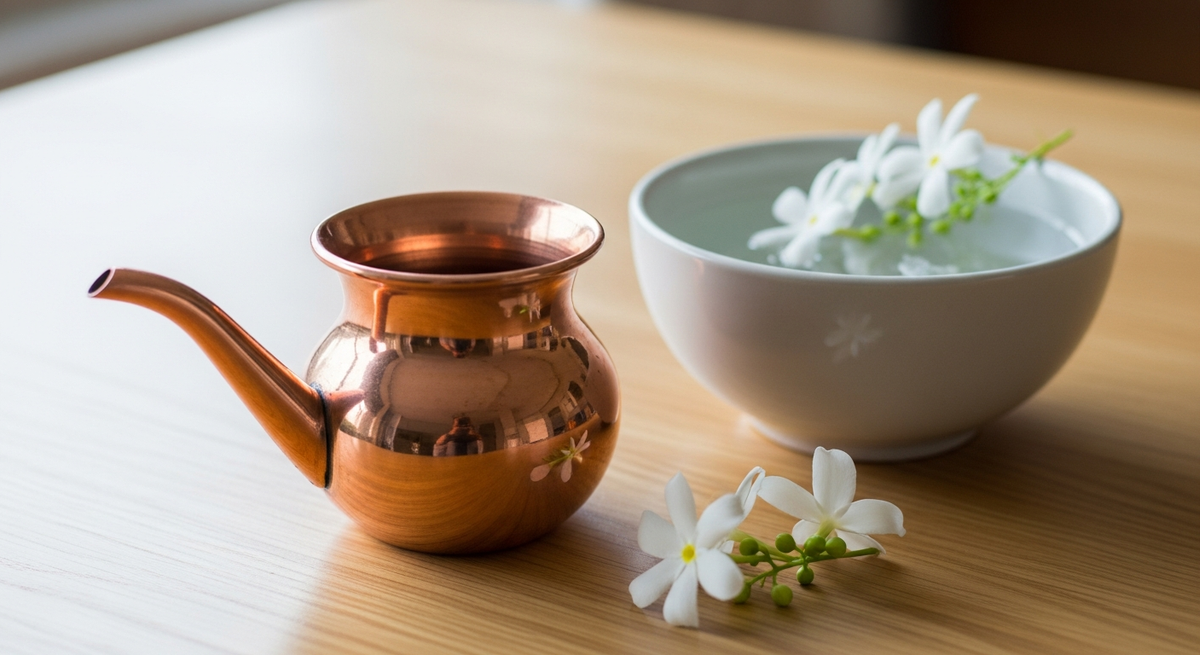
Neti is the cleansing of the nasal passages. Jala neti, the water form, involves pouring warm saline water through one nostril and allowing it to flow out through the other using a small pot called a neti pot. This is the most widely practised shatkarma in the West, recommended by ENT specialists and yoga practitioners alike for reducing nasal congestion, preventing sinus infections, and improving the quality of breathing. Sutra neti, the thread form, uses a rubber catheter or waxed thread and requires a teacher.
Nauli, Trataka and Kapalabhati
Nauli is the isolation and rotation of the rectus abdominis muscles, creating a churning movement in the abdomen. It is considered one of the most powerful of the shatkarmas, massaging all the abdominal organs, stimulating digestion, removing constipation, and developing precise neuromuscular control of the core. Learning nauli typically takes months of practice. The practitioner first masters Uddiyana Bandha, then isolates the central column of the abdomen, and finally learns to rotate this column from side to side.
Trataka is the practice of steady, unblinking gazing at a fixed point, most commonly a candle flame placed at eye level. The practitioner gazes without blinking until the eyes begin to water, then closes the eyes and holds the after-image of the flame in the mind's eye. Trataka strengthens the eye muscles, improves concentration, and is used as a preparation for dharana, the sixth limb of Patanjali's ashtanga yoga. It is one of the more accessible shatkarmas and can be practised at home with care.
Kapalabhati, which appears as a shatkarma in this context but is also widely practised as a pranayama, is a rapid rhythmic exhalation through the nose with passive inhalation. The word means skull-shining, referring to the clarity of the skull and sinuses that results from the practice. Rapid exhalation expels stale air and carbon dioxide from the lower lobes of the lungs, clears the nasal passages, and stimulates the abdominal organs through the rapid movement of the diaphragm.
Which Practices Are Safe at Home and Which Require Guidance
Jala neti with a proper neti pot and correct saline solution is safe for most adults to practise at home and carries few risks when performed correctly. Kapalabhati as a pranayama is widely taught in group yoga classes and is generally safe for healthy individuals, though it is contraindicated for people with high blood pressure, cardiac conditions, glaucoma, or history of stroke, and should not be practised during pregnancy.
Kunjal kriya (stomach washing) can be learnt from an experienced teacher and practised at home, but should not be attempted without instruction. Trataka can be explored at home with a candle, though care should be taken not to strain the eyes. Nauli requires in-person teaching: the sequence of preliminary practices needed before nauli becomes accessible is significant, and attempting it without foundation can cause strain.
Basti and the more advanced forms of dhauti, including vastra dhauti, should only be undertaken with a qualified Hatha yoga teacher or Ayurvedic practitioner. These practices work directly with the internal organs and mucosal membranes and can cause harm if performed incorrectly.
Shatkarma as Preparation for Kundalini Practice
The traditional understanding is that Kundalini energy, when activated through pranayama or other means, moves most freely through a body that has been systematically cleared of physical and energetic obstruction. The shatkarmas serve this purpose directly: they clear the colon, the stomach, the nasal passages, the eyes, and the abdominal region, each of which corresponds to particular nadis and chakras in the yogic system.
This is why the Hatha Yoga Pradipika places the shatkarmas before the instruction on pranayama. The sequence is intentional. Attempting advanced pranayama with a congested system can force energy through blocked channels, sometimes producing discomfort or instability. The shatkarmas reduce this risk by clearing the channels first.
In practice, most contemporary practitioners engage with a subset of the shatkarmas, particularly jala neti, kapalabhati, and possibly trataka, rather than the full classical set. This is a practical adaptation to modern life and is sufficient for most purposes. The complete set is most relevant for practitioners undertaking intensive retreat or advanced sadhana under the guidance of a qualified teacher.
Featured Programme
The I AM Programme
A structured course in nondual mindfulness for adults exploring awareness, stillness and the nature of the self
Explore the ProgrammeWritten by
Editorial Team

